
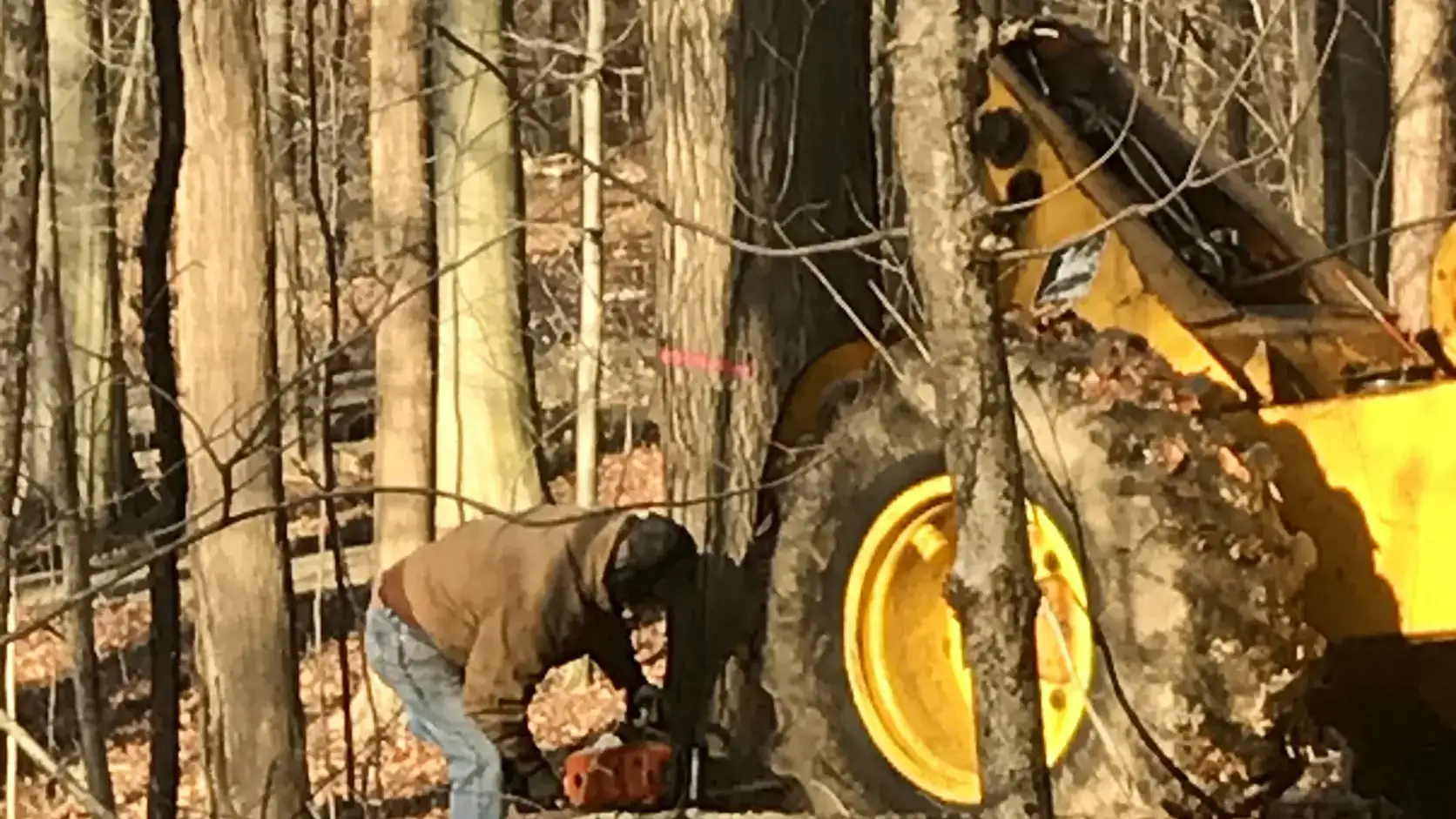
A timber buyer, logger, and forester may all walk the same property, but they are not automatically working for the same person. Before discussing price or tree selection, ask what role each person has, who pays them, and whose interests they represent.
Timber buyer
A timber buyer purchases standing timber or logs. The buyer may work for a mill, work independently, or operate a business that also handles logging.
The buyer evaluates what products may come from the timber, current market demand, harvest and trucking costs, risk, and expected margin. The resulting offer is a purchase proposal, not an independent appraisal for the landowner.
A buyer may provide useful information and may have substantial forestry experience. The economic role still matters. The buyer benefits from acquiring suitable timber under terms it can profitably perform.
Questions to ask include:
- What company and legal entity will sign the contract?
- Which species and products does the buyer currently purchase?
- Who will perform the logging?
- What insurance covers the operation?
- How will the timber be measured and paid for?
- Will the buyer assign or resell any rights?
- Can the buyer provide references for similar work?
Logger
A logger cuts, processes, skids, loads, and may transport timber. The logger may be the buyer, an employee, or an independent contractor hired by the buyer.
The logger’s equipment and judgment directly affect roads, soil, water, fences, residual trees, and cleanup. The written agreement should identify who is responsible for the work and damage, even when the buyer hires the logging crew.
Ask who supervises the crew, what training applies, which best management practices will be followed, how access will be built, and what happens if weather makes the site vulnerable.
Ohio has voluntary professional programs for loggers. Participation can be relevant evidence, but a label alone is not a substitute for current insurance, references, a clear contract, and active oversight.
Professional forester
A professional forester is trained in forest management. A service forester may provide public assistance. A private consulting forester can work for the landowner for a fee.
Depending on the engagement, a consulting forester may:
- Clarify ownership goals
- Inventory timber and estimate volume or value
- Select and mark trees
- Prepare sale information
- Contact suitable buyers
- Run a bid process
- Help compare buyers and terms
- Prepare or review harvest requirements
- Monitor the logging operation
ODNR states that a forester can represent and protect the landowner’s interests. That independence can be especially useful when the owner lacks timber-sale experience.
One company may wear several hats
A buyer may employ a forester. A logger may also buy timber. A consulting forester may help market a sale and receive a percentage of the proceeds. None of those arrangements is automatically wrong.
The key is disclosure. The owner should understand:
- What service is being provided
- Who the professional represents
- How the professional is paid
- Whether payment changes with the selected buyer or sale price
- What duties are written into the agreement
Do not assume that a forestry title means the person is acting as the owner’s independent adviser. Ask and put the answer in writing.
Direct purchases and buyer introductions
Timber Buyers Ohio buys standing timber and timberland directly. For timber sales, it can also introduce an owner to a suitable independent mill or timber buyer. It asks for the owner’s permission before sharing property details. The written agreement identifies the purchaser, whether that is Timber Buyers Ohio or an independent buyer.
For an introduction, Timber Buyers Ohio may receive a referral or success fee from the buyer or from sale proceeds, as disclosed in the written arrangement. Read the service and compensation disclosure and ask how the parties will be paid before agreeing to a sale.
A free property review or purchase offer is not an independent appraisal. Timber Buyers Ohio does not act as the owner’s independent consulting forester. Inventory, tree marking, management planning, legal advice, and harvest oversight require the appropriate professional and a separate agreement for that work.
Which person should an owner call first?
Call a professional forester first when you need an independent inventory, management advice, tree selection, competitive sale preparation, or harvest oversight. Call a timber buyer when you are ready to discuss a specific purchase. Ask who will log the property and inspect that party’s qualifications and insurance.
A matching service can help organize information and identify possible buyers. It should never blur those roles to make the service sound more qualified than it is.